It’s a small piece of metal sitting on top of your chimney, easy to forget about until something goes wrong. But a missing or damaged chimney cap is one of the most common problems we find during inspections across Greater Boston, and it’s rarely just a cosmetic issue. What starts as a small, inexpensive fix can quietly turn into thousands of dollars in water damage if it goes unnoticed for even a couple of seasons.
The cap is your chimney’s first line of defense against weather, animals, and debris, and it takes on that role every single day whether or not the fireplace below it is being used. When it fails, the damage often happens slowly and out of sight, until a homeowner eventually notices water stains on a ceiling, a musty smell after it rains, or an unwelcome guest that’s found its way into the flue. If it’s been a while since anyone looked at yours, a chimney inspection is the easiest way to find out exactly where you stand before those signs show up.
What the Cap Actually Protects Against
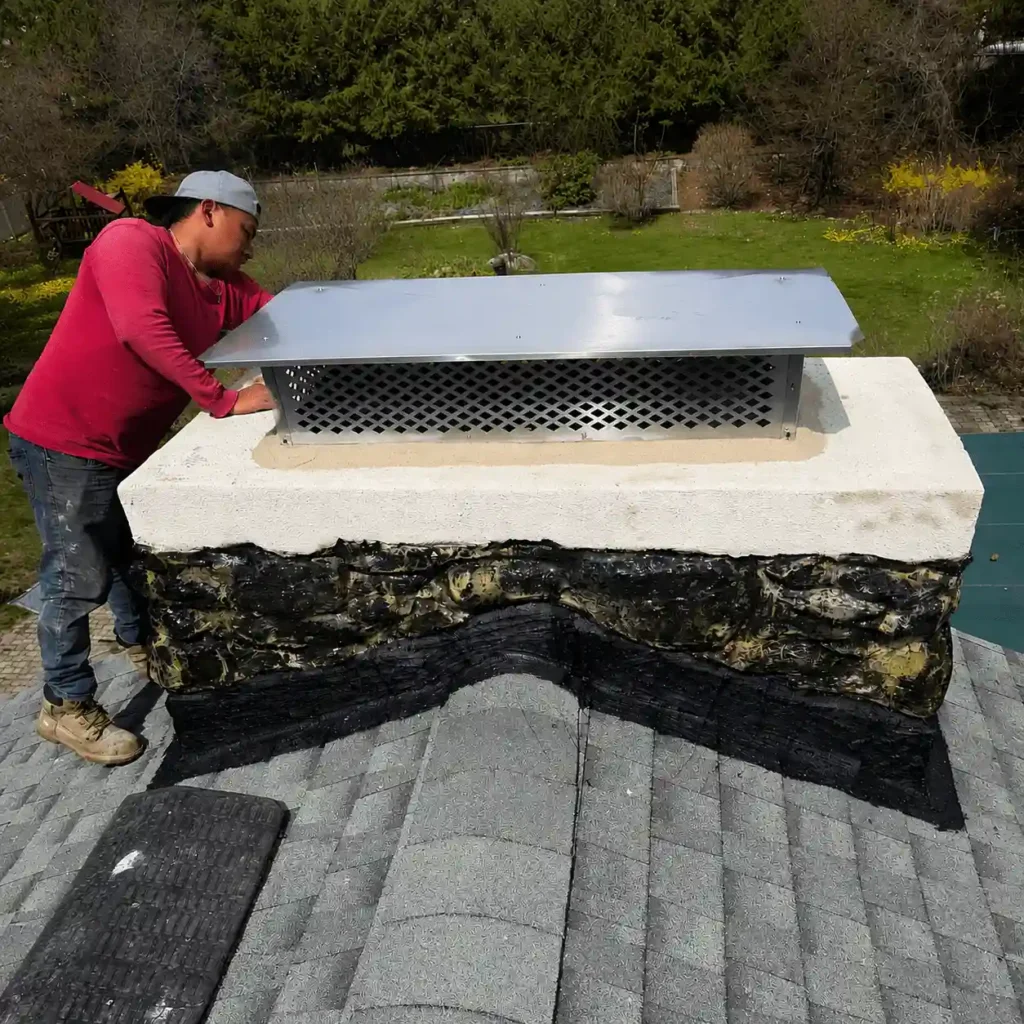
A chimney cap does considerably more than simply keep rain out of the flue. It blocks debris like leaves, twigs, and branches from falling down into the chimney, stops birds, squirrels, and raccoons from turning the flue into a den or nesting site, and helps prevent the kind of downdrafts that push smoke back into the house instead of venting it outside where it belongs.
When the cap is missing, rusted through, or knocked loose by wind, every one of those problems becomes possible at the same time, which is part of why a single missing cap tends to cause more than one kind of damage before anyone notices.
Older homes throughout Massachusetts are especially prone to this problem. Many chimneys built decades ago were never fitted with a cap in the first place, since the practice wasn’t as standard when they were originally constructed. That means a chimney can go years without one and seem perfectly fine, right up until a heavier storm season or a curious animal finally exposes the gap in protection that was there the whole time.
Water Damage You Won’t See Right Away
An open flue is essentially a direct, unobstructed path for rain and melting snow to travel straight down into the chimney. Over time, that moisture soaks into the flue liner, works its way into the smoke chamber, and eventually reaches the surrounding masonry itself, where it does the most lasting damage.
Because most of this happens deep inside the chimney structure, it’s often invisible until the damage has become significant enough to show up somewhere else in the house. Water stains spreading across a ceiling near the fireplace, a musty odor that shows up specifically after it rains, or rust forming on the damper are all signs that moisture has already been getting in for a while. Waterproofing and a properly fitted cap work together to keep that moisture from ever reaching the masonry in the first place, rather than trying to repair the damage after it’s already done.
💡 Pro Tip: If you notice a damp or musty smell coming from your fireplace, especially one that seems tied to rainy weather, it’s worth having the cap and crown checked before assuming the source of the problem is somewhere else in the house.
Animal Intrusion Is More Common Than You’d Think
An uncapped chimney looks a lot like a ready-made den to a squirrel, raccoon, or bird searching for shelter, particularly heading into colder months. Once an animal gets in, the nesting material it brings along can block the flue partially or completely, which becomes a serious fire and carbon monoxide risk the next time someone tries to use the fireplace without realizing the flue is obstructed.
Scratching sounds coming from inside the chimney, unusual odors, or bits of debris falling into the firebox are all signs that something has already made itself at home. These situations tend to get worse the longer they go unaddressed, since animals that successfully nest once often return to the same spot in following seasons.
❌ Common Mistake: Lighting a fire without checking the flue first if there’s any reason to suspect animal activity. A blocked chimney forces smoke and carbon monoxide back into the living space instead of venting it safely outside, and that risk is entirely avoidable with a quick check beforehand.
A Damaged Cap Can Also Affect How Your Fireplace Drafts
Beyond keeping unwanted things out, a properly fitted cap also helps manage airflow at the very top of the flue. A bent, rusted, or missing cap can create turbulence right at the point where smoke needs to exit cleanly, which leads to poor draft, more smoke lingering in the room, and a fireplace that’s simply harder to keep burning well no matter how carefully the fire is built.
🏆 Insider Insight: Not all caps are interchangeable. The right size and style depend on the specific dimensions of your flue and how your chimney is configured, which is why a poorly fitted replacement cap can end up causing nearly as many drafting problems as having no cap at all.
Rust streaks running down the brick below the cap, visible gaps or bending, scratching sounds or odors from the flue, smoke backing into the room more than it used to, and water stains near the fireplace are all reasons to have the cap looked at sooner rather than later. A properly sized chimney cap installation is one of the more affordable repairs on a chimney, and it prevents nearly every problem described above from ever getting the chance to start.
If you’re not sure what condition your cap is currently in, contact us. for an inspection. We serve homes throughout Greater Boston and Eastern and Central Massachusetts, and a quick check now can save you from a far more expensive repair once winter weather has had a chance to find its way into the masonry.