If you burn wood in your fireplace, creosote is something you’re dealing with whether you realize it or not. It’s the dark, sticky substance, sometimes flaky, sometimes glossy and hardened, that coats the inside of a flue after a fire, and it’s one of the leading causes of chimney fires in New England homes every single winter.
Understanding what creosote actually is and how it forms is the first step toward keeping a chimney safe through a full heating season. The second, more important step is making sure it’s actually removed on a regular basis, which is exactly what a professional chimney sweep is designed to do.
What Creosote Actually Is
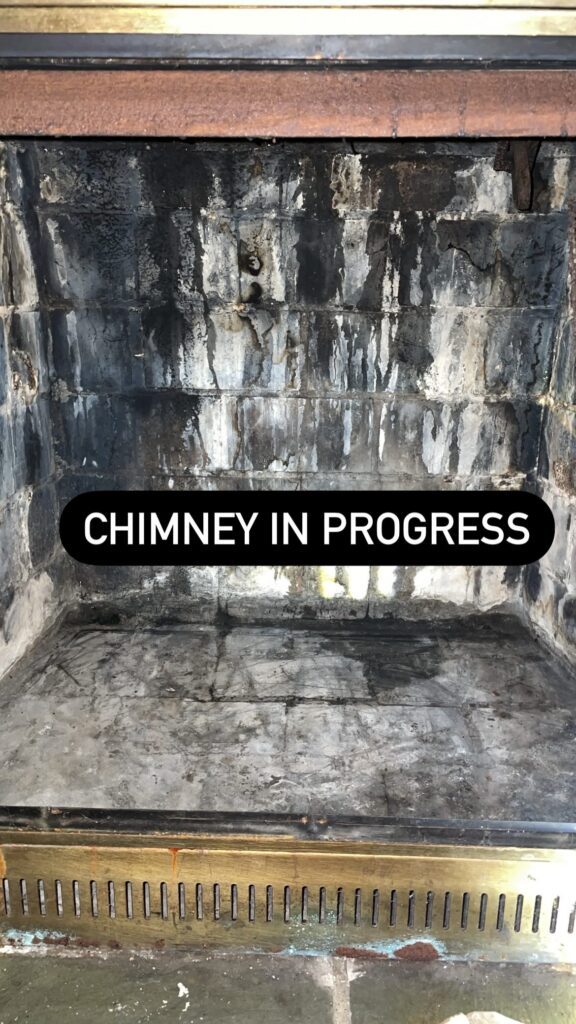
Creosote forms when wood smoke cools as it travels up through the flue on its way outside. That smoke carries unburned particles, gases, and moisture along with it, and as it cools against the interior walls of the chimney, it condenses into a residue that clings to the liner rather than escaping into the air.
Over time, and across repeated fires throughout a season, that residue builds up in layers rather than washing away or burning off on its own. Depending on how long it’s been accumulating and how the fires producing it were burned, creosote can look like flaky black soot, a hardened tar-like coating, or in more advanced cases, a shiny, glazed layer that’s considerably harder to remove.
Why Creosote Builds Up Faster Than You’d Expect
A handful of common habits speed up creosote formation, often without homeowners realizing it’s happening. Burning unseasoned or “green” wood produces noticeably more smoke and moisture than properly dried wood, and both of those increase how much creosote condenses inside the flue. A damper that isn’t opened fully during a fire, or a fire that smolders at a low temperature rather than burning hot and clean, has essentially the same effect, since cooler smoke deposits more residue on its way up.
Restricted airflow makes the problem worse as well, whether it comes from a fire that’s cooling down, a chimney that’s taller or colder than it should be for the fireplace it serves, or a flue that isn’t properly sized for the appliance connected to it. All of these slow the draft moving up the chimney and give smoke more time to leave residue behind before it exits.
💡 Pro Tip: Dry, well-seasoned hardwood that’s been split and left to dry for at least six months to a year burns considerably hotter and cleaner than wood that’s still holding moisture, producing noticeably less creosote in the process.
Why It’s a Serious Fire Hazard
Creosote is highly flammable in nearly every form it takes, but it becomes especially dangerous once it reaches its glazed, hardened stage, which can ignite at the flue temperatures reached during an entirely normal, hot-burning fire. Once it catches, a chimney fire can reach extremely high temperatures inside the flue in a matter of minutes, often with very little visible warning from inside the house until the fire is already well underway.
Chimney fires can crack flue tiles, warp or damage the liner, and in more serious cases, transfer enough heat to ignite nearby combustible framing in an attic or wall cavity. Even a contained, relatively quiet chimney fire that a homeowner never notices in the moment can leave a flue structurally compromised and unsafe to use again without repair.
❌ Common Mistake: Assuming you’d definitely know if you’d ever had a chimney fire. Many are quieter and more contained than people expect, and the first real sign is sometimes discovered during the next professional inspection, when a technician finds warped metal, cracked flue tiles, or creosote that’s been exposed to far more heat than a normal fire would produce.
Chimney fires are also one of the more common causes of house fires during the winter heating season, which is part of why fire departments and chimney safety organizations spend so much time reminding homeowners to have their flue swept every year. It isn’t a rare or unusual event, it’s one of the more preventable causes of a home fire, and prevention comes down to nothing more complicated than routine maintenance handled on a consistent schedule.
How Creosote Buildup Is Identified and Removed
During a professional inspection, a technician examines the flue to determine the stage and thickness of any creosote buildup and removes it using tools suited to the job. Heavier, glazed creosote in particular often requires more specialized methods than a routine sweep can provide, which is one of the main reasons an annual professional cleaning matters more than an occasional attempt to handle it yourself.
The right approach also depends on how the fireplace or wood stove actually gets used. A home that burns wood daily throughout the winter typically builds up creosote faster than one that only lights a fire occasionally, which is why we tailor the inspection and cleaning schedule to how a household actually uses its fireplace rather than treating every chimney the same way.
🏆 Insider Insight: Creosote buildup isn’t always visible just by looking up from the firebox. A full inspection with a camera, like a Level 2 chimney inspection, gives a much more complete picture of what’s actually accumulated further up inside the flue, in sections a flashlight alone simply can’t reach.
Reducing how quickly creosote builds up going forward mostly comes down to burning habits: sticking to seasoned, properly dried hardwood, keeping the damper fully open while a fire is burning to maintain good draft, and avoiding smoldering, low-temperature fires whenever possible. None of that replaces the need for an annual sweep and inspection, even in homes that don’t burn especially often, since even occasional fires produce creosote over time. If your fireplace also shows signs of heat damage inside the smoke chamber, our team handles smoke chamber repair as part of restoring a chimney to safe, code-compliant condition.
Not sure how much creosote has built up in your flue, or when it was last professionally removed? Schedule an inspection with TopDog Chimney before your next fire. It’s a straightforward way to rule out one of the more serious risks a wood-burning fireplace carries before the coldest part of the New England winter arrives.