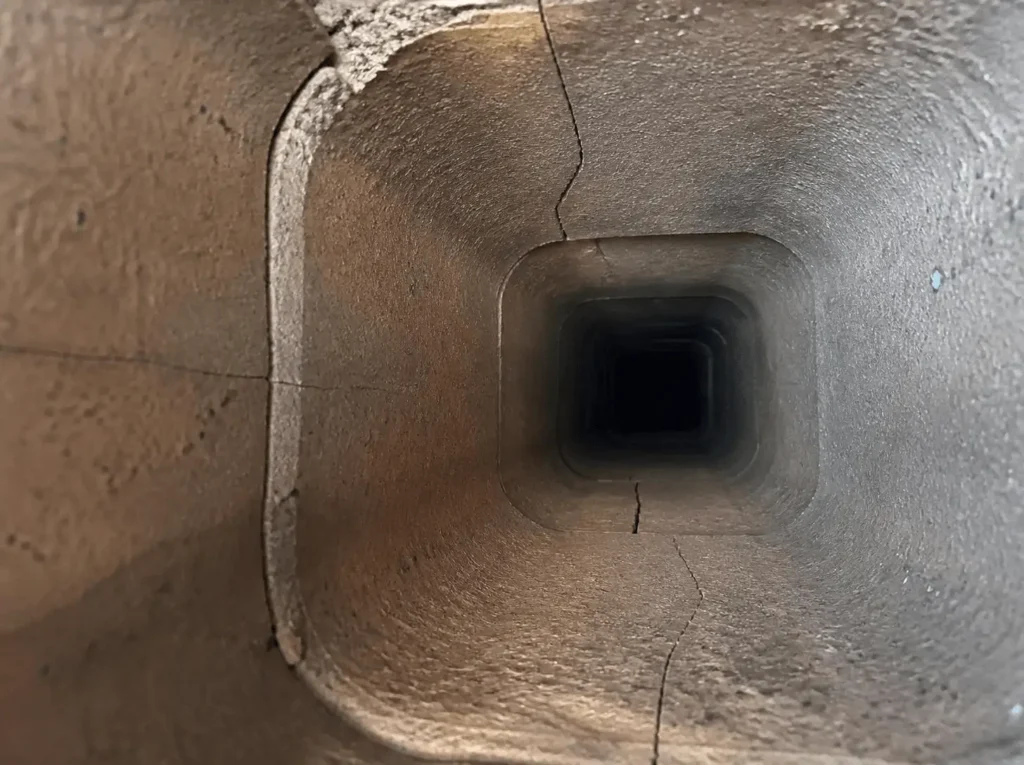
While most homeowners focus on the exterior beauty of their masonry, the real danger often hides behind the brickwork. A cracked chimney liner is more than a maintenance headache; it is a structural vulnerability that threatens your family’s air quality. In our experience, many residents in the historic colonial homes of Lexington and Concord are unaware that their original clay liners are reaching the end of their functional lifespan. We believe in providing honest, reliable information so you can make informed decisions. Protect your home today.
A cracked chimney liner is a dangerous breach in your fireplace’s exhaust system that allows toxic gases and extreme heat to bypass the flue and enter your home’s structure. These cracks often result from thermal shock, moisture damage, or age, compromising the safety and efficiency of your entire heating system. We recommend immediate chimney liner repair in Greater Boston to prevent fire hazards.
Tip 1: Recognize the Invisible Threat of Carbon Monoxide
Carbon monoxide is a tasteless, odorless gas that can seep through even microscopic cracks in a clay flue liner. When the liner is compromised, these toxic fumes bypass the chimney’s intended path, filtering into bedrooms and living areas. Our team prioritizes your family’s safety by identifying these carbon monoxide risks in Greater Boston before they become emergencies. We use advanced equipment to detect these leaks early.
In the tightly packed streetcar suburbs of Arlington and Belmont, we often find that poor ventilation exacerbated by a cracked liner leads to lingering “fireplace smells” that are actually low-level CO indicators. Because your dog breathes this air too, we take a zero-tolerance approach to flue breaches. Over 400 Americans die annually from unintentional non-fire-related carbon monoxide poisoning, making a sealed flue your home’s most critical safety feature.
❌ Common Mistake: Relying solely on a wall-mounted CO detector to tell you if your liner is cracked. These devices are backstops, not diagnostic tools. By the time an alarm sounds, your family has already been exposed. A professional Level 2 chimney inspection is the only way to verify the physical integrity of the flue.
Tip 2: Understand How Thermal Transfer Triggers Attic Fires
Cracks in your chimney liner allow extreme heat to transfer directly to the combustible wooden framing of your house through a process called pyrolysis. Over time, this constant heat lowers the ignition temperature of the wood, potentially leading to a structure fire that begins inside your walls. Addressing structural chimney damage in Greater Boston is essential for preventing these hidden fire starters.
We recently inspected a 1908 Woburn Victorian where the flue tiles had shifted, leaving a two-inch gap near the attic floorboards. The heat was so intense it had charred the adjacent 2×4 studs to a crisp. If you notice the wall behind your chimney feels hot to the touch, stop using the fireplace immediately. Pyrolysis can ignite wood at temperatures as low as 200 degrees Fahrenheit after long-term exposure, which is well within the range of normal fireplace operation.
💡 Pro Tip: Clay flue tiles are excellent at handling heat but terrible at handling rapid temperature changes. To avoid “thermal shock” cracks, never start a roaring fire in a cold chimney; start with a small kindling fire to gradually warm the tiles before adding larger logs.
Tip 3: Look for Flaking Clay and Shifting Tiles
Evidence of a failing liner often accumulates at the bottom of your chimney in the form of thin, reddish flakes or shards of clay. Known as spalling, this occurs when moisture enters the liner’s pores and freezes, causing the surface to peel away. Identifying clay liner deterioration in Greater Boston requires looking for these physical signs during your annual maintenance routine.
Homeowners near the historic colonial homes of Lexington and Concord should check their floor clean-out doors or the firebox floor for what looks like “terra cotta potato chips.” This is a clear signal that your liner is disintegrating and can no longer effectively contain heat or gases. Flue tiles are usually 5/8 of an inch thick, so significant flaking means the structural wall of the flue is thinning rapidly.
| Feature | TopDog Chimney – Professional Service | Typical Competitor |
| Inspection Thoroughness | ✅ Full video scans included in every Level 2 check | ❌ Quick visual check with a flashlight only |
| Pet & Family Safety | ✅ HEPA filtration and “zero-mess” guarantee | ❌ Standard shop vacs that leak dust |
| Material Matching | ✅ Era-specific materials for historic homes | ❌ Generic materials for all house types |
Tip 4: Monitor Fireplace Efficiency and Draft Strength
A cracked liner disrupts the smooth flow of air, causing turbulence that weakens the chimney’s draft. When the draft is compromised, smoke is more likely to billow back into your living room rather than rising up the flue. We specialize in diagnosing drafting problems in Greater Boston to ensure your fireplace operates at peak efficiency during the cold Massachusetts winters.
Near the intersection of Main and Church in Winchester, we often see older chimneys where cracks allow outside air to leak into the flue, cooling the exhaust gases too quickly. This “cold plug” prevents the chimney from drawing correctly. Installing high-quality stainless steel chimney liners provides a smooth, insulated path that maximizes heat retention and draft. Modern liners can improve efficiency by up to 20% compared to damaged clay tiles.
✅ Did You Know? The “Venturi Effect” is what makes your chimney work. Any crack or hole in the liner acts like a puncture in a straw, making it nearly impossible to create the necessary suction to pull smoke out of your home.
Tip 5: Prevent Creosote Buildup in Flue Crevices
Cracks in your chimney liner provide the perfect hiding spot for creosote, a highly flammable byproduct of burning wood. Because these crevices are difficult to reach with standard brushes, the creosote builds up over time and increases the risk of a chimney fire. Our chimney cleaning in Greater Boston focuses on identifying these hidden hazards to keep your home safe.
In the coastal properties near Hingham, salt air can accelerate the degradation of mortar joints between flue tiles, creating even larger pockets for creosote to settle. When a chimney fire occurs, it often starts in these very cracks where the fuel is most concentrated. Creosote can ignite at temperatures as low as 451 degrees Fahrenheit, which is easily reached during a standard wood fire.
🏆 Insider Insight: When we reline a chimney, we don’t just slide a pipe in. We often use a “pour-in” insulation or a wrap to ensure the new liner stays warm. This prevents the gases from condensing into creosote in the first place, making your chimney much easier to keep clean.
Tip 6: Check Compliance Before Selling Your Home
Real estate inspections in Massachusetts are increasingly strict regarding chimney safety and code compliance. A cracked liner is a major red flag that can stall a home sale or lead to significant price concessions during the closing process. We provide chimney safety certifications in Greater Boston to help homeowners prepare their properties for the market with confidence.
For homeowners in Bristol County near Easton, having a documented history of liner maintenance can be a significant selling point. If an inspector finds a breach, they will likely mandate a full relining before the house can be insured by the new owners. A new chimney liner often provides a 100% return on investment by ensuring the sale proceeds without structural contingencies or safety-related delays.
Tip 7: Choose Between Repair and Full Relining
While some minor cracks can be sealed with specialized masonry resurfacing products, structural failure usually requires a full stainless steel liner installation. We provide honest assessments to determine the most cost-effective and safest path forward for your specific chimney. Our goal is long-term chimney health in Greater Boston, ensuring you never pay for repairs you don’t actually need.
In Plymouth County near Duxbury, we often recommend stainless steel upgrades for homes with older clay systems because they come with lifetime warranties. We never subcontract our work, ensuring that every liner is fitted with the careful workmanship our family-minded team is known for. Stainless steel liners are tested to withstand temperatures up to 2,100 degrees Fahrenheit, providing a level of safety that clay simply cannot match.
The Bottom Line for Greater Boston Homeowners
- Cracked liners are a primary cause of carbon monoxide leaks and house fires.
- Visual signs like clay flakes in the firebox indicate immediate failure.
- A damaged flue significantly reduces heating efficiency and increases wood consumption.
- Modern stainless steel relining is the gold standard for long-term safety and resale value.
If you suspect your chimney has reached its limit, don’t wait for a safety emergency to act. At TopDog Chimney, we provide honest work, done right, with a focus on your family’s well-being. Contact us for a professional inspection today.
Frequently Asked Questions
How do I know if my chimney liner is cracked?
The most reliable way to identify cracked chimney liners is through a professional video inspection. Look for flakes of terra cotta in your fireplace, as clay flue tiles often spall when they fail. TopDog Chimney – Professional Chimney Service All Year Round uses high-resolution cameras to find hairline fractures that are invisible to the naked eye.
How much does it cost to reline a chimney in Greater Boston?
Relining costs typically range from $2,500 to $7,000 depending on the height of your home and the material used. A standard installation usually takes 4 to 8 hours to complete. Get a written quote today to lock in your safety upgrade before the winter season begins.
Is it safe to use a fireplace with a small crack in the liner?
No, even a small crack can allow heat to transfer to nearby wood or permit carbon monoxide to enter your home. TopDog Chimney – Professional Chimney Service All Year Round follows NFPA 211 safety standards, which mandate that all flues must be gas-tight and structurally sound. We recommend immediate repair for any breach.
Do you provide chimney services near Arlington and Belmont?
We serve all of Greater Boston, including the streetcar suburbs of Arlington and Belmont, as well as Middlesex and Norfolk Counties. Whether you live in a historic colonial or a modern build, our local team is ready to help. Schedule your inspection today for reliable, honest service.