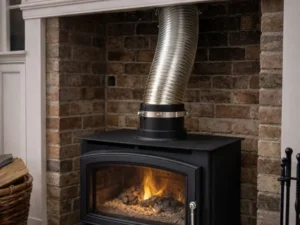
Your wood stove is only as safe as the pipe that carries smoke out of your home. Over time, that stove pipe takes a beating from intense heat, moisture, and corrosive byproducts — and when it starts to fail, it can put your home and family at real risk. Here is how to know when a wood stove pipe needs to be replaced, why it matters, and what a professional replacement looks like.
Watch
See a wood stove pipe replacement
Watch our team remove a worn stove pipe and install a new, code-compliant one — safe, clean, and done right. Is your stove pipe rusting or leaking? Call (781) 782-8727.
What is a wood stove pipe?
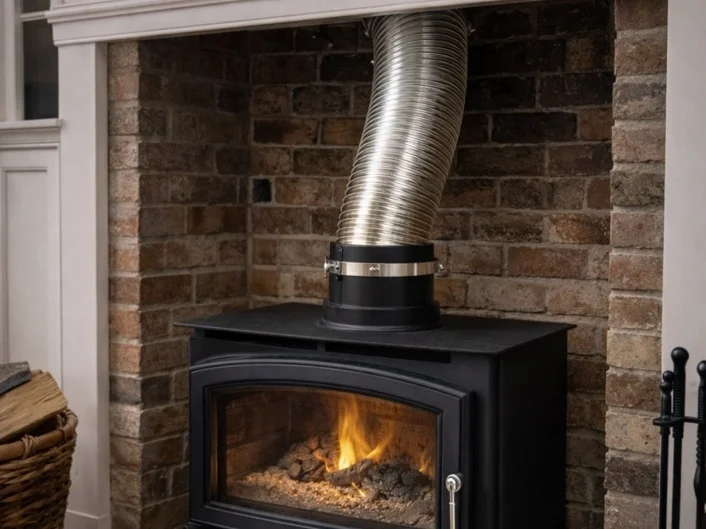
The wood stove pipe (also called the stovepipe or connector pipe) is the section of pipe that runs from the top or rear of your stove to the chimney or flue. It carries hot smoke and combustion gases out of the living space. It is different from the chimney itself: the connector pipe is the exposed, single- or double-wall metal pipe inside the room, while the chimney is the structure that vents everything to the outdoors. Both need to be in good condition for your stove to run safely.
Signs your wood stove pipe needs replacing
A stove pipe does not last forever. Watch for these warning signs:
- Rust or corrosion — flaking, orange, or pitted metal means the pipe is deteriorating from the inside out.
- Holes or thin spots — even small holes let smoke and sparks escape into the room.
- Cracked or separating seams and joints — gaps where sections meet leak smoke and weaken draft.
- Heavy dents or warping — damaged pipe restricts airflow and can fail under heat.
- Heavy creosote buildup — thick, tarry deposits inside the pipe are highly flammable.
- Age or an outdated setup — older pipe that no longer meets current clearance and code should be upgraded.
Why a damaged stove pipe is a safety risk
A failing stove pipe is more than a cosmetic problem. Holes, gaps, and corrosion can let smoke and carbon monoxide leak into your home, allow sparks to reach nearby combustibles, and reduce the draft your stove needs to burn cleanly. Poor draft also means more creosote, which raises the risk of a chimney fire. Replacing a compromised pipe restores a safe, sealed path for exhaust and keeps your stove heating efficiently.
Single-wall vs. double-wall pipe
Single-wall stove pipe is less expensive but radiates more heat and requires larger clearances to walls and ceilings. Double-wall (insulated) pipe stays cooler on the outside, allows tighter clearances, and improves draft — often the better choice for safety and performance. The right pipe depends on your stove, your space, and local code, which is something we confirm before any replacement.
How a wood stove pipe replacement works
A professional replacement is straightforward when it is done right:
- Inspect the stove, connector pipe, and chimney to identify every section that needs attention.
- Measure and select correctly sized, code-compliant pipe (single- or double-wall) for your setup.
- Remove the old, damaged pipe and clean the connection points.
- Install and seal the new pipe with proper clearances, secure joints, and the correct slope to the chimney.
- Test the draft and verify everything vents safely before we finish.
Should you replace a stove pipe yourself?
Wood stove pipe replacement looks simple, but clearances to combustibles, proper joint direction, and correct connection to the flue are safety-critical and code-regulated. A small mistake — a reversed joint, a gap, or an undersized pipe — can cause smoke leaks or a fire. For anything beyond a like-for-like section swap, it is worth having a certified chimney professional handle it.
Keep your wood stove safe
The best way to avoid an emergency is a yearly inspection and cleaning. We check the stove pipe, connector, and chimney for corrosion, creosote, and clearance issues, and replace any pipe that is past its service life. If your wood stove pipe is rusting, leaking, or simply old, TopDog Chimney installs and replaces stove pipe safely and to code for homes across Burlington and Greater Boston. Call (781) 782-8727 to schedule your inspection or replacement.