Every year, as the weather starts cooling down in Massachusetts and New Hampshire, we get calls from homeowners who are getting ready to use their fireplace for the season.
Some call because they are being responsible and want a routine inspection. Others call because something already feels wrong: smoke backing into the room, a strong odor from the fireplace, visible cracks, or water stains near the chimney.
From our experience, the best time to inspect your chimney is before you need it.
The Chimney May Look Fine From the Living Room
One of the biggest mistakes homeowners make is assuming that if the fireplace looks clean, the chimney is safe.
The visible fireplace is only one part of the system. Behind it and above it, there is a full venting system that needs to move smoke, gases, heat, and combustion byproducts safely out of the home.
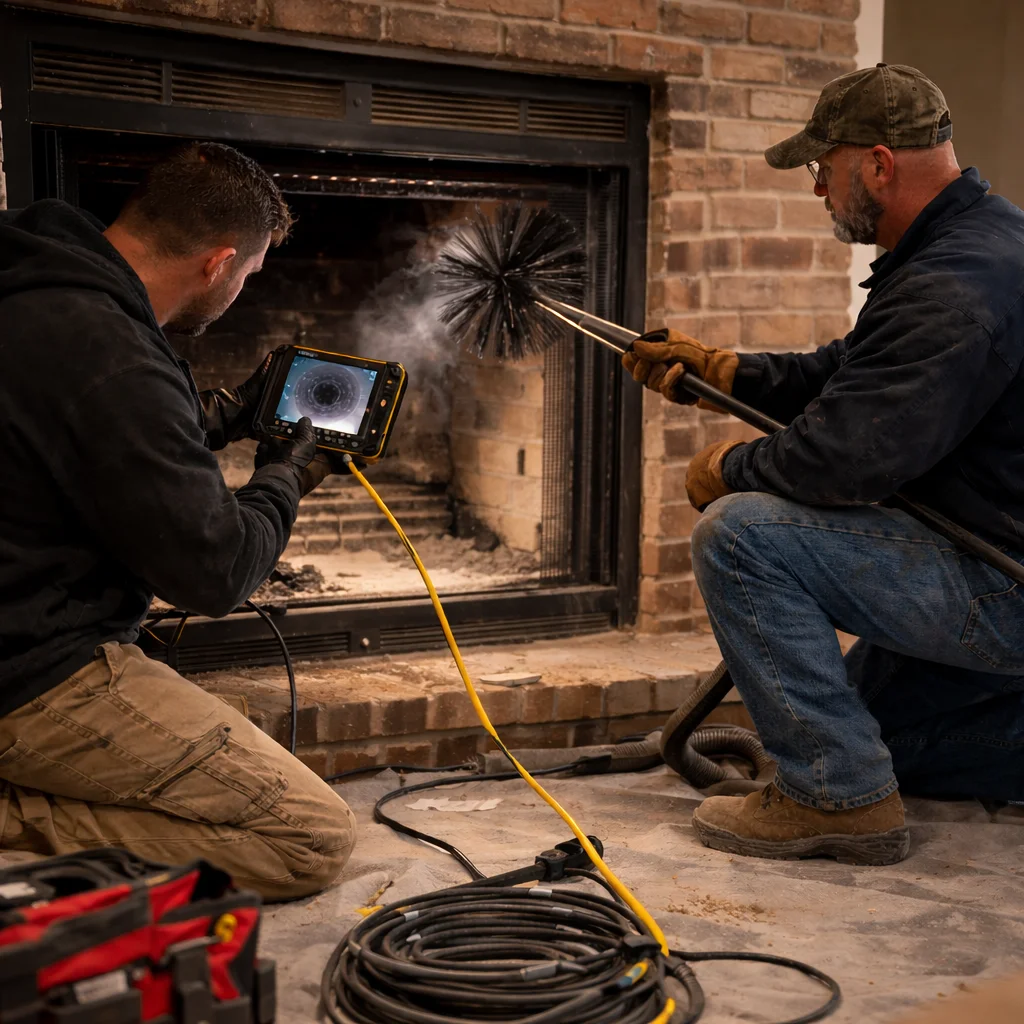
During a professional chimney inspection, we are looking at much more than the firebox.
We check the chimney structure, flue, liner, damper, smoke chamber, crown, cap, flashing, masonry condition, and signs of blockage or buildup.
Creosote Buildup
Creosote is one of the most important things we look for during inspections and cleanings.
When wood burns, it creates byproducts that can stick to the inside of the chimney flue. Over time, this buildup can become a fire hazard. It can also reduce airflow, which makes the fireplace perform poorly.
We often see heavier creosote buildup in homes where:
The fireplace is used often
Wood is not fully seasoned
Fires are kept too cool or smoky
The chimney has poor draft
The system has not been cleaned in a long time
A chimney does not need to look “dirty” from the fireplace opening to have buildup higher inside the flue.
Blockages and Animal Activity
In the Burlington area and across New England, chimney blockages are common.
Leaves, twigs, nesting material, and debris can get into an uncapped chimney. Birds, squirrels, and other animals can also create problems. A blockage can interfere with proper ventilation and may cause smoke or gases to come back into the home.
This is one of the reasons chimney caps are so important.
Masonry and Winter Damage
Before winter, we pay close attention to the outside of the chimney.
Cracked mortar, damaged bricks, crown cracks, and loose flashing may not seem urgent in the fall, but once freezing weather arrives, those weak spots can get worse quickly.
Water gets in, freezes, expands, and creates more damage.
That is why a small masonry issue before winter can become a larger repair after winter.
Firebox and Liner Condition
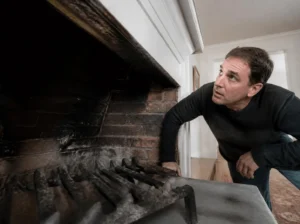
Inside the fireplace, we look for damaged firebrick, deteriorated mortar joints, cracks, gaps, or signs that heat has affected the structure.
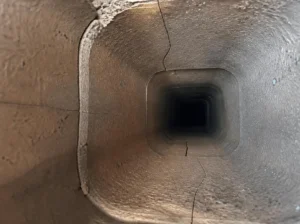
We also check the liner condition. A damaged or missing chimney liner is a serious issue because the liner helps protect the home from heat transfer and combustion gases.
If the liner is cracked, deteriorated, or not properly sized, the chimney may not operate safely or efficiently.
Our Field Advice
If you live in Burlington, MA or nearby areas in MA or NH, do not wait until the first cold weekend to schedule chimney service. That is when everyone remembers their fireplace at the same time.
A pre-season chimney inspection gives you time to fix issues before you are relying on the fireplace.
From what we see in the field, most serious chimney problems do not happen overnight. They start small, and they get worse when they are ignored.
A proper inspection helps catch those issues early.
Related Chimney Services
Not sure which service you need? Contact TopDog Chimney for a free written quote across Greater Boston.